
Turmeric in Ayurveda: Health Benefits, Uses, and Precautions
Walk into any Indian kitchen, and you’ll find it — that jar of brilliant golden powder that gets added to almost everything. Turmeric (known as Haldi in Hindi) is so embedded in Indian cooking and culture that it’s easy to forget it was medicine long before it was a spice. In Ayurveda, turmeric has been used therapeutically for over 4,000 years — as an anti-inflammatory, a wound healer, a digestive tonic, a blood purifier, and a spiritual purifier.
Today, turmeric is the subject of over 13,000 published scientific studies. The scientific community is essentially catching up to what the Charaka Samhita (one of Ayurveda’s foundational texts) documented centuries ago. Let’s explore everything Ayurveda knows and teaches about this golden healer.
Turmeric in Ayurvedic Medicine: The Basics
In Ayurvedic pharmacology, turmeric is classified as:
- Rasa (taste): Bitter, pungent, and astringent
- Virya (energy): Heating
- Vipaka (post-digestive effect): Pungent
- Dosha effects: Balances all three doshas — particularly pacifies Kapha and Pitta when used in appropriate quantities; can increase Vata in excess
- Guna (qualities): Dry, light
- Prabhava (special action): Powerful Rakta Shodhak (blood purifier)
The primary active compound in turmeric — curcumin — is a polyphenol responsible for most of its therapeutic effects. However, Ayurveda always uses whole turmeric rather than isolated curcumin, recognizing that the whole plant contains synergistic compounds that work together more effectively than any single extract.
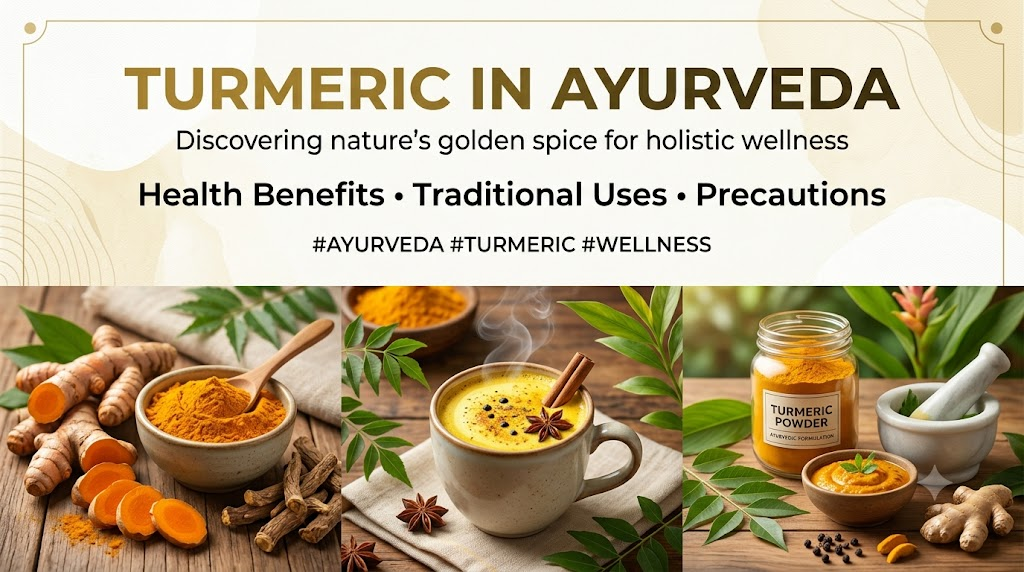
Top Health Benefits of Turmeric in Ayurveda
1. Anti-Inflammatory: Nature’s Ibuprofen
This is turmeric’s most celebrated and scientifically documented property. Curcumin inhibits the NF-kB pathway — one of the master switches of inflammation in the body — as effectively as many pharmaceutical anti-inflammatory drugs. But unlike NSAIDs (non-steroidal anti-inflammatory drugs), turmeric does this without damaging the stomach lining, kidneys, or liver.
In Ayurvedic practice, turmeric paste is applied topically to inflamed joints, wounds, and skin conditions — while turmeric taken internally provides systemic anti-inflammatory support for conditions like arthritis, inflammatory bowel disease, and chronic pain.
2. Blood Purification (Rakta Shodhana)
In Ayurvedic medicine, turmeric is one of the premier blood-purifying herbs. It supports the liver’s ability to filter toxins from the blood, reduces inflammatory compounds circulating in the bloodstream, and improves the health of blood vessel walls. This blood-purifying action explains why turmeric has traditionally been used for skin conditions (acne, eczema, psoriasis) — which Ayurveda views as manifestations of blood impurity.
3. Digestive Health and Agni Support
Turmeric is a classic digestive spice in Ayurveda — included in virtually every curry not just for flavor but for its ability to stimulate digestive fire (Agni), promote bile production, and reduce intestinal inflammation. Research confirms its benefits for irritable bowel syndrome, Crohn’s disease, and ulcerative colitis — suggesting that Ayurvedic tradition was onto something important about turmeric and gut health long before clinical trials existed.
4. Wound Healing and Antimicrobial Properties
The traditional Ayurvedic application of turmeric paste to cuts, burns, and skin infections has a solid scientific basis. Curcumin accelerates wound healing by increasing collagen synthesis, reducing inflammation, and directly killing bacteria and fungi. Before antibiotics existed, turmeric was one of the primary wound-care treatments in Ayurvedic medicine — a tradition still practiced in many Indian households today.
5. Liver Protection and Detoxification
The liver is the body’s primary detoxification organ, and turmeric is one of Ayurveda’s most powerful liver tonics. It increases the production of bile (aiding fat digestion), protects liver cells from damage caused by toxins and medications, and stimulates the liver’s own antioxidant enzyme systems. For anyone regularly exposed to environmental toxins, alcohol, or medications, turmeric is an essential daily ally.
6. Brain Health and Cognitive Protection
Curcumin can cross the blood-brain barrier — an impressive feat that few compounds can achieve. Once there, it reduces neuroinflammation, boosts BDNF (brain-derived neurotrophic factor, which promotes new neuron growth), and may help clear the amyloid plaques associated with Alzheimer’s disease. This may explain why India has some of the world’s lowest rates of Alzheimer’s — a finding that has intrigued researchers for decades.
7. Skin Health and Natural Beauty
Turmeric’s anti-inflammatory, antioxidant, and antibacterial properties make it one of the most powerful natural skin care ingredients available. In Indian tradition, turmeric paste is applied to the face before wedding ceremonies — a practice called Haldi — to give the skin a radiant, golden glow. For everyday use, turmeric helps reduce acne, fade dark spots, reduce redness, and slow skin aging through its antioxidant action on collagen-degrading enzymes.
Traditional Ayurvedic Uses of Turmeric (Haldi)
- Golden Milk (Haldi Doodh): Warm milk with turmeric, black pepper, and ghee — an Ayurvedic classic for immunity, joint health, and sleep
- Turmeric Paste (Lepam): Applied topically to wounds, skin conditions, and inflamed joints
- Turmeric in Cooking: Added to virtually every savory dish in Ayurvedic cuisine
- Turmeric and Honey: A classic Ayurvedic respiratory remedy
- Turmeric Neti Pot: A pinch of turmeric in neti water for nasal inflammation
Important Precautions and Who Should Be Careful
While turmeric is remarkably safe for most people when used as a food spice, there are important precautions to observe when using it therapeutically:
- Blood thinners: High-dose curcumin can have mild blood-thinning effects. Those on warfarin or other anticoagulants should consult their doctor before taking supplements.
- Gallstones or bile duct obstruction: Turmeric stimulates bile flow, which can aggravate existing gallstone conditions.
- Pregnancy: Culinary amounts are safe; therapeutic supplements should be avoided during pregnancy.
- Iron deficiency: High-dose curcumin can inhibit iron absorption; those with iron deficiency should separate turmeric supplementation from iron-rich meals.
- Surgery: Stop high-dose turmeric supplements at least two weeks before planned surgery due to potential blood-thinning effects.
How to Maximize Turmeric Absorption
Curcumin is poorly absorbed by the body when taken alone. Here’s how to dramatically improve bioavailability:
- Add black pepper: Piperine in black pepper increases curcumin absorption by up to 2,000%
- Take with healthy fat: Curcumin is fat-soluble; ghee, coconut oil, or olive oil improves absorption significantly
- Heat it: Cooking turmeric in oil with black pepper (the basis of every curry) is the optimal delivery method
Final Thoughts
Turmeric in Ayurveda is not a trend — it is a 4,000-year-old tradition backed by an ever-growing mountain of scientific evidence. From fighting inflammation and purifying blood to protecting the brain and healing skin, the benefits of Haldi are as broad as they are deep. Add it to your food generously, make Golden Milk a nightly ritual, and if addressing specific health concerns, consult an Ayurvedic practitioner for appropriate therapeutic doses. This golden spice genuinely deserves the reverence Ayurveda has always given it.